
Vouri Ranch - 39603 Road 810
00 39603 Road 810, Raymond, CA | Lat/Lng: 37.3258, -119.8004
$1,650,000
220 ac.
06/06/2026
ACTIVE
Description
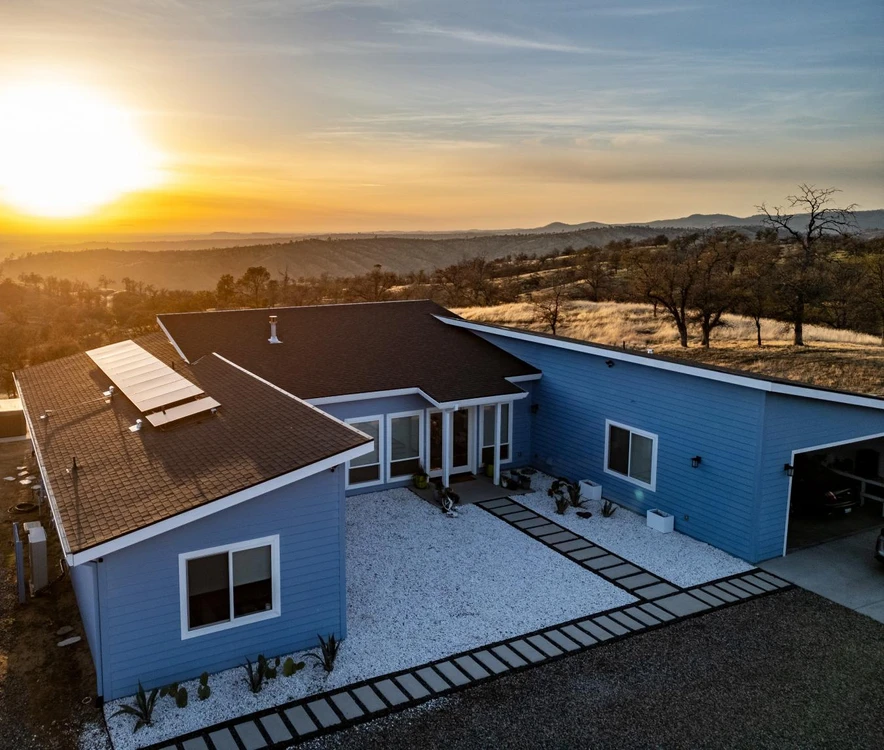
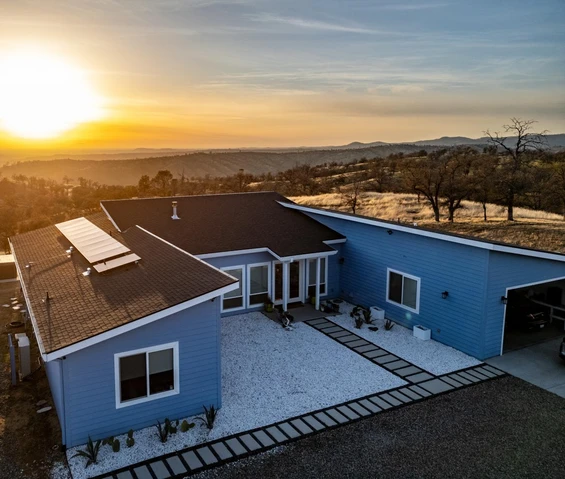
Y O U R S I E R R A N E V A D A S A N C T U A R Y - 2 2 0 . 8 9 A C R E S 2 0 2 2 C U S T O M H O M E 4 5 M I N U T E S T O Y O S E M I T E For the buyer ready to trade coastal density for horizon-whether that's a Bay Area or a Los Angeles professional reconsidering the math on California urban life, or an international buyer placing US real estate at the center of a broader global strategy-this is what the other side looks like. Two hundred twenty acres of private foothills in Madera County, California, anchored by a 2022 custom home, a million-gallon pond, and a Williamson Act tax shelter most owners never get to inherit. Forty-five minutes to the south gate of Yosemite National Park. Two and a half hours from the San Francisco Bay Area. A property at this scale, with new construction included and Tax-sheltered land at the heart of the structure rarely comes to market in this region. This is a Sierra Nevada holding with built-in tax efficiency and real structural flexibility. A retreat for now. An ultimate residence for when you're ready. And a strategic California real estate asset for the long term. T H E O P P O R T U N I T Y - R E T R E A T T O D A Y, O P T I O N S F O R T O M O R R O W The buyer who fits this property is typically already known to them. For coastal-California families, that's a couple with significant home equity, looking to acquire a true mountain sanctuary before the next round of insurance-driven price discovery rolls through the foothills. For international buyers-from London and Geneva to Dubai and Singapore, Mexico City to So Paulo - it's a strategic placement of capital into a Yosemiteadjacent California asset: a recognized global lifestyle destination, a stable USD-denominated holding, and a property with built-in tax efficiency for owners who hold it long. Some buyers will use this as a weekend or extended-stay retreat. Others will relocate full-time on a one- to two-year horizon. A growing number are exploring short-term rental income as a longer-arc play, with patience to navigate the Williamson Act process- covered in detail below-that governs use of the land. The structure of this property supports every version of that plan. T H E H O M E - 2 , 4 5 8 S Q F T , B U I L T 2 0 2 2 , B U I L T T O L A S T Modern, turnkey, and free of deferred maintenance. Four bedrooms, three full bathrooms, 2,458 square feet of thoughtfully designed living space. High-end finishes throughout. Most importantly: built to current California standards. energy and fire-resistance standards. In the post-Palisades, post-Eaton insurance market, this is no longer an Aesthetic preference is the difference between an insurable asset and an uninsurable one. Older foothill Homes are getting non-renewed by the major carriers. This one was engineered to current code from day one. Immediate occupancy. No build cycles, no supply-chain headaches, no surprise punch lists. T H E S H O P - F U L L B A T H , P R E - P L U M B E D F O R A D U C O N V E R S I O N The oversized metal shop is far more than equipment storage. It includes its own full bathroom and is preplumbed for conversion into an Additional Dwelling Unit (ADU). For the right buyer, this is a meaningful value-add opportunity-a guest house, in-law space, caretaker quarters, or a separately rentable unit upon County permitting. As a working structure, it serves equally well for ranch equipment, vehicle storage, a remote-work studio, or a dedicated workshop separated entirely from the main residence. W A T E R and P O W E R - T H E S A N C T U A R Y A D V A N T A G E The one-million-gallon pond is the property's most strategically valuable amenity, and it functions on two levels at once. First, lifestyle: kayaking, fishing, swimming, and the kind of golden-hour reflections that justify the entire purchase decision on their own. Second, ecosystem: the pond draws wildlife year-round and creates the privacy soundscape that small parcels simply cannot reproduce. Rooftop solar combined with a full backup generator delivers true off-grid capability. When the next public Safety power shutoff rolls through the foothills; you won't notice. When utility costs spike, you're insulated. For buyers who have spent the last five years watching the grid get less reliable and the bills get larger, this matters. T H E L A N D - T H R E E P A R C E L S, O N E H O L D I N G The 220.89 acres are held across three separate contiguous Assessor's parcels-a structural advantage that few comparable properties offer the following: APN 055-200-079 - 86.06 acres, improved. Contains the residence and metal shop. APN 055-200-083 - 72.81 acres, vacant. Pond, raw grazing land, and recreational trails. APN 055-200-084 - 62.02 acres, vacant. Raw grazing land and trails with perimeter fencing. Rolling Sierra Nevada foothill terrain with panoramic views from every aspect. Cattle grazing is currently in place across the unimproved parcels, maintaining the land in productive use and supporting the property's Williamson Act while standing. T H E W I L L I A M S O N A C T-T A X S H E L T E R N O W, O P T I O N A L I T Y O V E R T I M E The property is enrolled in a California Land Conservation Act (Williamson Act) contract that conveys with the sale. For buyers who plan to use the property as a primary residence, second home, or family retreat, the contract is straightforward upside: the underlying acreage is assessed based on agricultural value rather than residential market value, sheltering annual property tax exposure well below what a comparable unrestricted $1.65M California holding would generate. The 134+ acres on the two vacant parcels alone deliver meaningful carrying-cost reduction year after year. For buyers evaluating short-term rental income, the path is real but requires honest due diligence. Under Madera County's STR ordinance, short-term rental operation is generally incompatible with land held under an active Williamson Act contract. A buyer pursuing STR has three options, and the right one depends on the timeline. and risk tolerance: Compatibility review. Before assuming cancellation is required, a buyer should obtain a written interpretation from Madera County Planning on whether the intended use is permitted under the existing contract as-is. Some Uses may be compatible depending on parcel structure, contract type, and zoning. This is the lowest-cost first step and the one most buyers skip. Nonrenewal. Filed with the County, this stops the contract from automatically renewing and returns the land to unrestricted use at the end of the contract's remaining term-typically nine years. Annual taxes step up gradually during the nonrenewal period. Low-cost, low-risk, but slow. Best fit for buyers who want preserved flexibility without paying the cancellation fee. Cancellation. The only path to immediate non-agricultural use. Cancellation is a discretionary entitlement subject to Board of Supervisors approval, public notice, likely CEQA review, and required county findings. The cancellation fee equals 12.5% of the unrestricted fair market value of the cancelled land (25% if the contract is a Farmland Security Zone contract - buyer to verify type with Madera County). Add application fees, legal and consulting costs, and a realistic six- to twelve-month timeline. Approval is not guaranteed: California Government Code 51282 specifies that the existence of a more profitable use, on its own, is not sufficient grounds for cancellation. Whichever path applies, a buyer should confirm the current contract type (standard Williamson Act vs. Farmland Security Zone), request a written compatibility determination from Madera County Planning, and allocate entitlement risk and costs clearly in the purchase agreement. This is exactly the kind of structural detail that deserves a real conversation with County Planning and a real estate attorney experienced in Williamson Act matters before the deal is structured. For buyers who are not pursuing STR-and that is most buyers in this profile-the Williamson Act is straightforward upside: ongoing tax shelter on 220 acres that otherwise would be assessed near residential market value. I N V E S T M E N T F L E X I B I L I T Y The three-parcel structure unlocks exit strategies that single-APN properties cannot match. Hold all 220.89 acres as a private estate with full Williamson Act tax shelter. Pursue the Williamson Act process on the improved parcel only - preserving tax efficiency on the two vacant parcels while opening a longer-term path to STR. Sell off either vacant parcel individually to recoup capital while retaining the hub. Carve out distinct building sites for a private compound. Land-bank the additional acreage for long-term appreciation as a Yosemite corridor. inventory continues to compress. A same-road active land listing currently trades at a meaningfully higher peracre rate for less than a quarter of the acreage offered here - supporting strong relative value at the current list price. T H E L I F E S T Y L E - T R A D E T R A F F I C F O R H O R I Z O N Forty-five minutes to the south gate of Yosemite National Park. The full Yosemite, Sequoia, and Sierra National Forest recreational ecosystem is at your doorstep - hiking, climbing, fly fishing, kayaking, skiing in season. On the property itself: ATV trails, deer and wild pig, fishing the pond, and miles of private hiking with sweeping foothill vistas. The hot tub and outdoor living areas catch sunrise and sunset across the rolling hills. This is the version of California life that the coastal corridors stopped offering somewhere around 2015. L O C A T I O N and A C C E S S Raymond, California sits at the eastern edge of Madera County in the Sierra Nevada foothills - close enough to Yosemite to make day trips routine, far enough from coastal density to deliver real privacy and space. Two and a half hours from the San Francisco Bay Area via Highway 99. Approximately four to five hours
Details
County: Madera
Zipcode: 93653
Property Type One: Ranches
Property Type Two: Undeveloped Land
Brokerage: eXp Realty Land & Ranch
Brokerage Link: https://land.com


Nearby Listings
Mariposa County, CA

$1,199,000 - 471 ac.
Madera County, CA

$3,648,000 - 114 ac.
Merced County, CA

$32,036,280 - 1124 ac.
Madera County, CA

$2,538,408 - 317 ac.
Madera County, CA

$4,500,000 - 701 ac.
Mariposa County, CA
$179,000 - 18 ac.
Mariposa County, CA

$598,500 - 6 ac.
Mariposa County, CA

$680,000 - 150 ac.
Madera County, CA

$21,900 - 1 ac.
Mariposa County, CA

$2,999,000 - 633 ac.